
Some parts of your home get your attention every day. Others quietly do their job in the background.
Your septic system can fall into that second category.
Here in Charles County, we’ve welcomed thousands of new residents in recent years. And many have relocated from more urban areas where public sewer is the norm.
If that’s you, it’s completely understandable that you’ve never had a reason to learn how septic works — or what care it needs.
You could have lived in your Charles County home for several years and still be unsure when the tank was last pumped, where the drainfield is or even whether your home uses septic at all.
Those are useful questions to ask at any point. Getting familiar with your system can help you protect your home, avoid costly problems and care for the waterways that make this part of Southern Maryland special.
First, find out what you have
Your home’s purchase documents, seller disclosures and inspection reports are good places to start. Look for references to a septic system and any records of previous service. If you rent, ask your landlord how wastewater is handled and whom to contact about problems.
Still unsure?
The Charles County Department of Health’s Environmental Health Division offers a property-information request process and can help you find out what records are available. You can reach the division at 301-609-6751.
Once you confirm that your home has septic, aim to answer three questions: Where is it? What type of system is it? When was it last inspected and pumped?
If that last answer is a mystery, scheduling a professional inspection is a useful place to start.
What happens after the water goes down the drain?
With public sewer, wastewater travels away from your property to a shared treatment facility. With septic, treatment happens on your property.
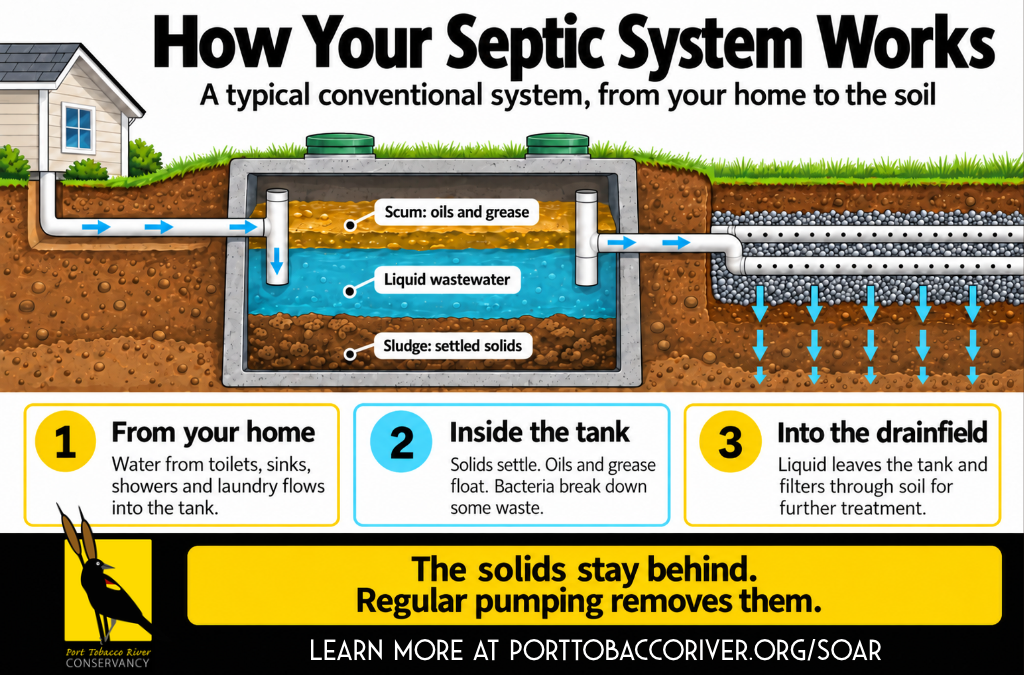
In a typical system, wastewater from toilets, sinks, showers and laundry flows into an underground tank. Solids settle, oils and grease rise, and bacteria help break down waste. Liquid then moves into a drainfield, where the soil provides further treatment.
That drainfield is part of the system, too, even if it looks like an ordinary stretch of lawn. The Environmental Protection Agency’s explanation of how septic systems work offers a closer look.
As the homeowner, you’re responsible for arranging the care that keeps the system working.
Put maintenance on the calendar
When the drains work and nothing smells unusual, septic maintenance can be easy to overlook. But a system needs attention before something goes wrong.
PTRC encourages residents to have their tanks pumped every three years as part of our SOAR campaign. Pumping removes accumulated solids that could otherwise move into and clog the drainfield.
The EPA recommends inspecting an average household system at least every three years and typically pumping every three to five years. Your household size, tank size and water use affect the schedule. Systems with pumps or other mechanical components generally need more frequent inspections, often annually.
Ask your provider for a schedule suited to your system, and keep the service records. The EPA’s septic-care guide explains these maintenance needs.
Everyday habits help, too
You don’t need to reorganize your life around your septic system. A few habits make a difference:
- Flush only toilet paper and human waste. Put wipes and other products in the trash.
- Keep grease, paint and solvents out of drains. Limit garbage-disposal use.
- Spread laundry throughout the week and fix leaking faucets or running toilets.
- Protect the drainfield. Avoid driving or parking on it, direct downspouts away from it, and ask before planting trees nearby.
These steps help prevent clogs, excess water and damage.
Why keeping up matters
For your household, a neglected system can mean sewage backing up indoors, wastewater surfacing in the yard and expensive repairs. Once a drainfield is damaged, pumping the tank may not resolve the underlying problem.
Slow drains, gurgling plumbing, sewage odors or unusually wet ground around the system deserve attention. Contact a septic professional rather than waiting for the next scheduled service. If sewage backs up or surfaces, keep people and pets away from it and contact the health department for guidance.
The effects can also reach beyond your property. A failing system can release bacteria and other contaminants into groundwater and nearby waterways, potentially affecting private drinking-water wells. Excess nutrients can encourage algae growth and reduce the oxygen fish and other aquatic life need.
For homes in the Port Tobacco River watershed, caring for a septic system is one practical way to help care for the river.
Charles County offers help with the cost
Before booking a pump-out, check the county’s assistance programs.
Pump-out reimbursement: Eligible residents can receive up to $100 per system once every three years. Applications must be submitted within six months of service. The work must be performed by a hauler approved by the Charles County Health Department. Check the approved list before scheduling and save your receipt.
The county also offers $100 toward septic riser installation, limited to once per property. Risers provide easier access to the tank for service. Find requirements and applications on the Charles County septic reimbursement page.
Help with an upgrade: Routine pumping and nitrogen reduction serve different purposes. If your system needs an upgrade, the health department administers Bay Restoration Fund grants that may help with a nitrogen-reducing system. Funding is limited, and eligibility and project requirements apply.
Caring for your home helps care for the river
Whether you’ve owned your home for six months or sixteen years, understanding your septic system is a worthwhile part of taking care of it.
You don’t have to become an expert. Knowing what you have, establishing a maintenance schedule and making a few everyday adjustments are a good foundation. If you’re unsure where things stand, finding your records or calling a septic professional is a practical first step.
Visit PTRC’s SOAR — Save Our Amazing River — page to learn more about caring for your property and helping protect the Port Tobacco River.